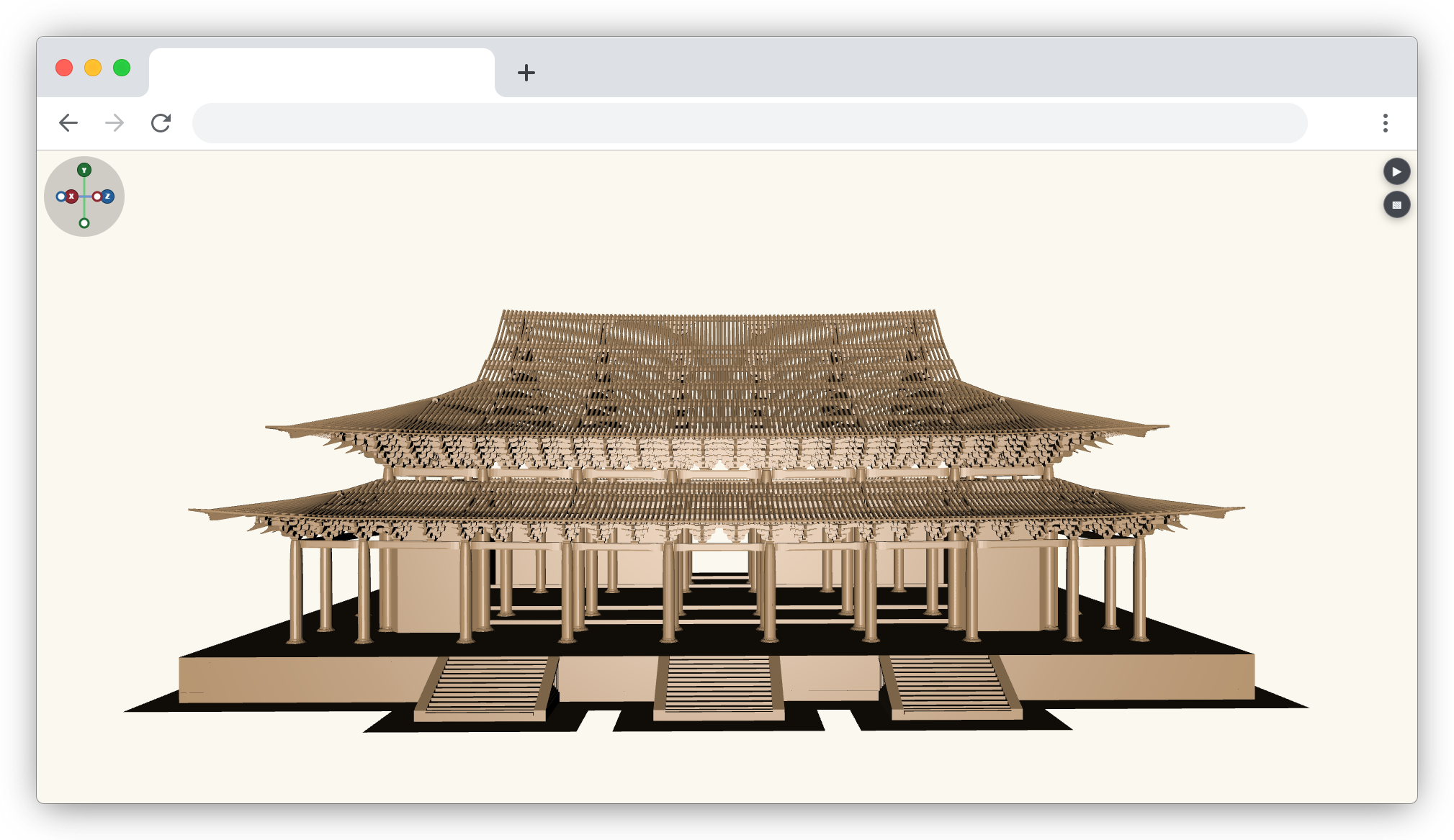
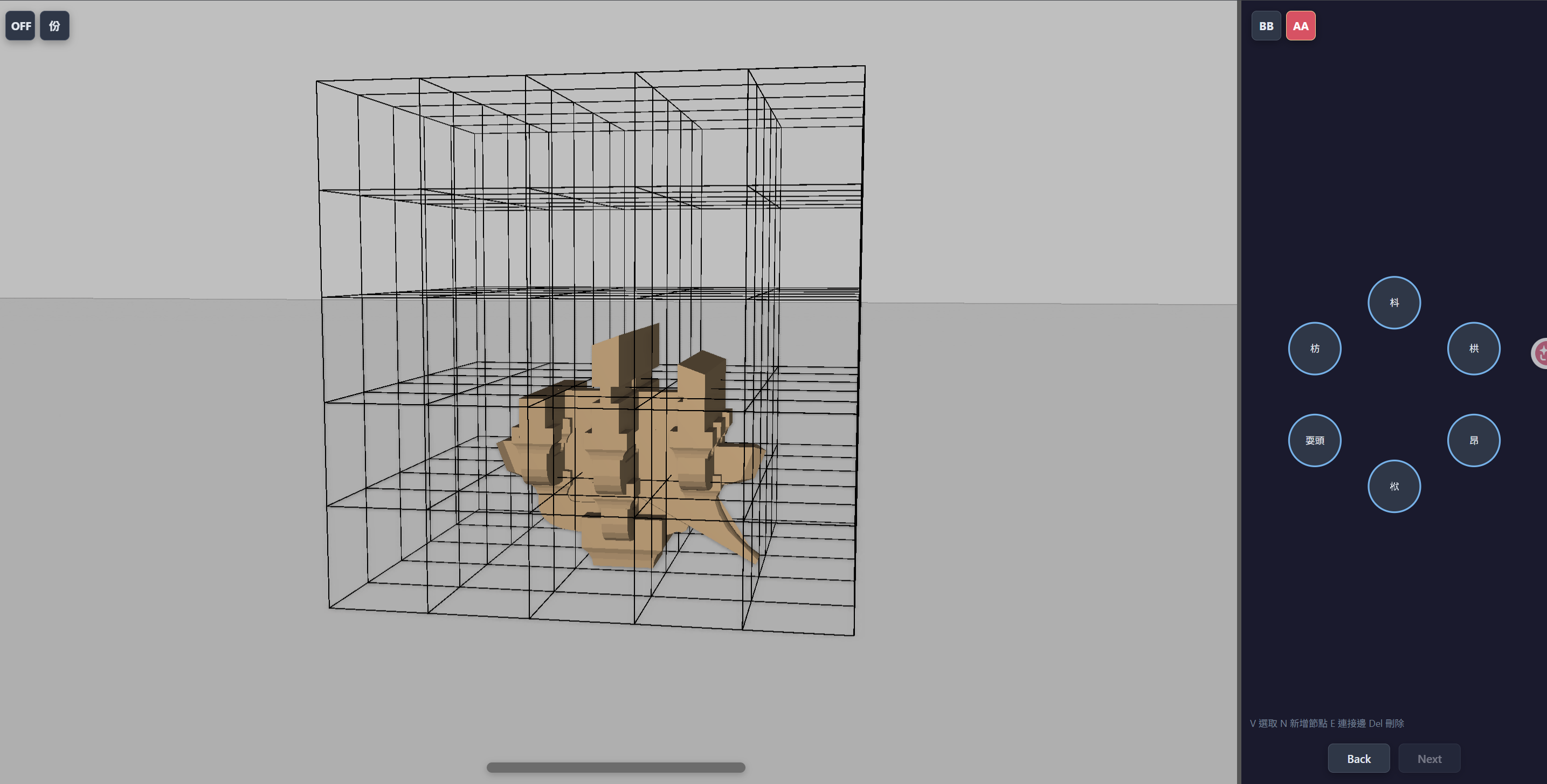
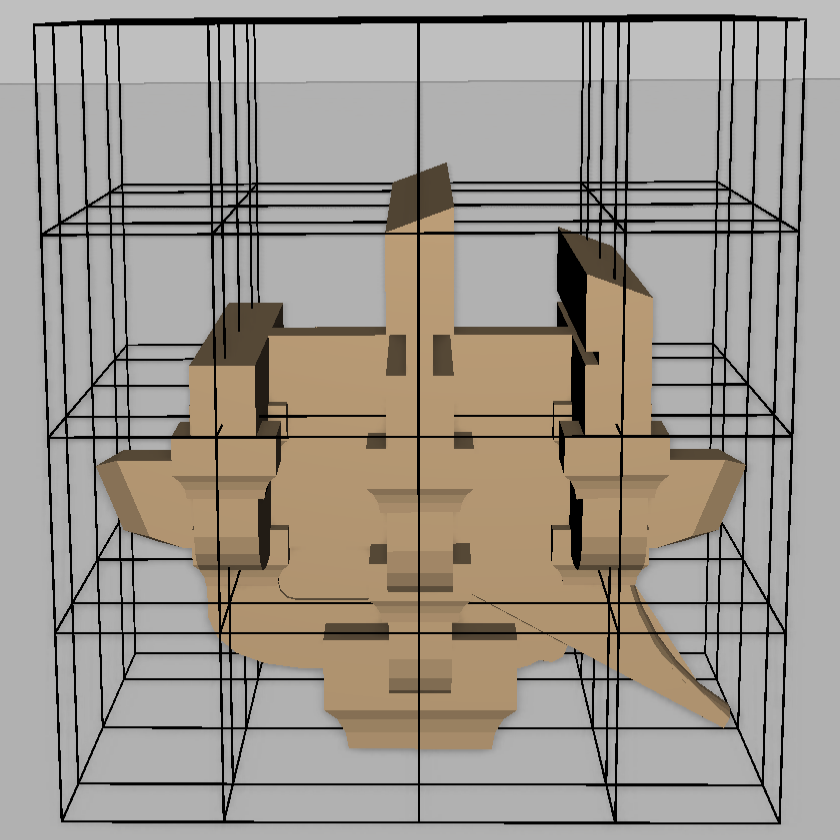
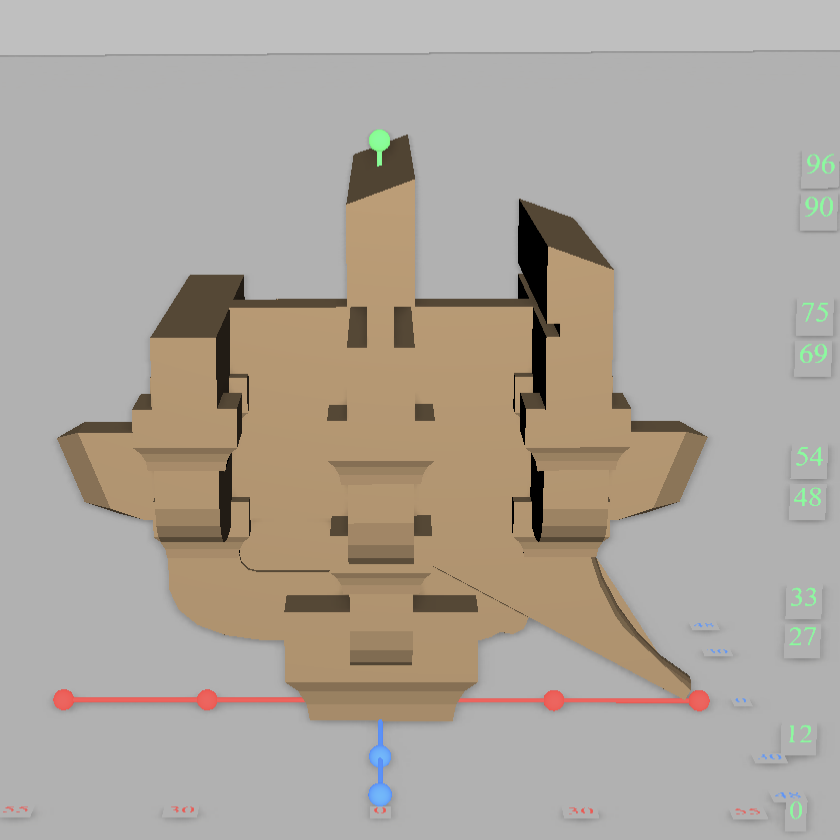
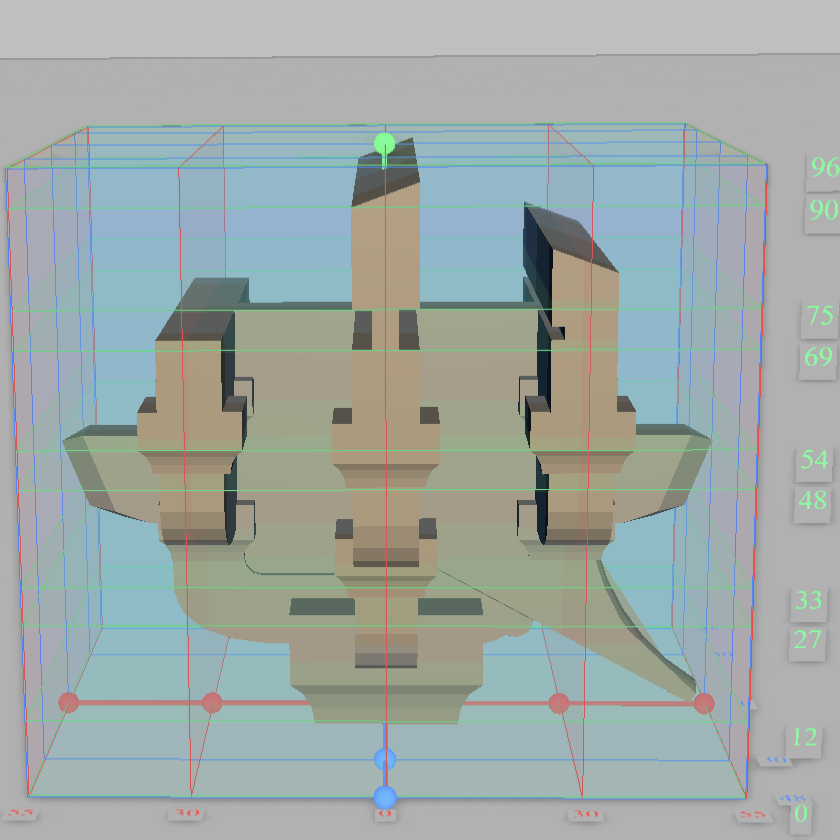
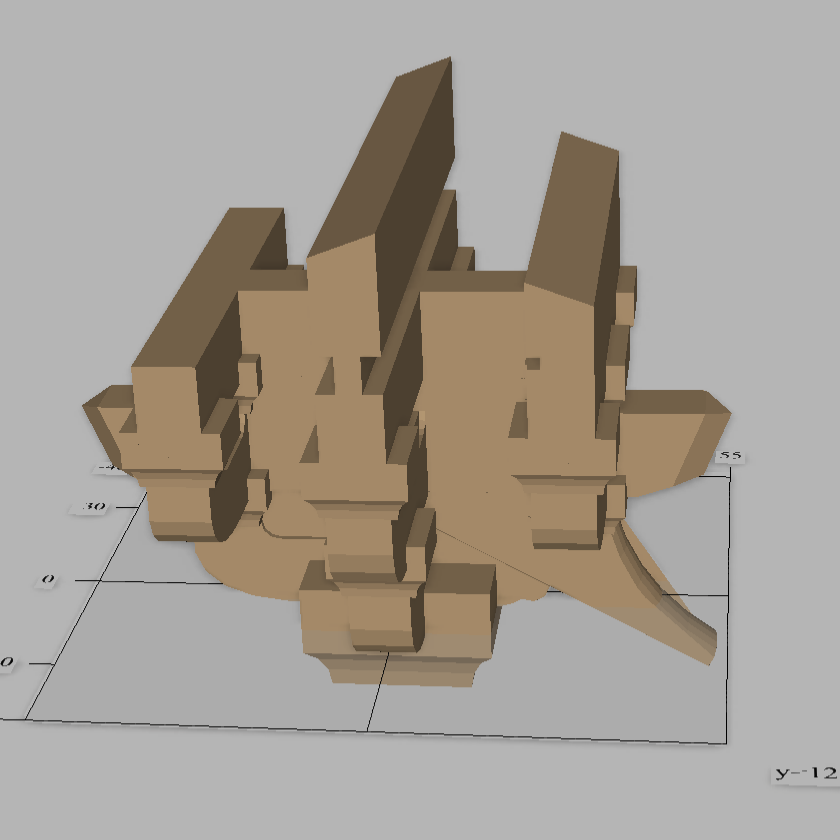
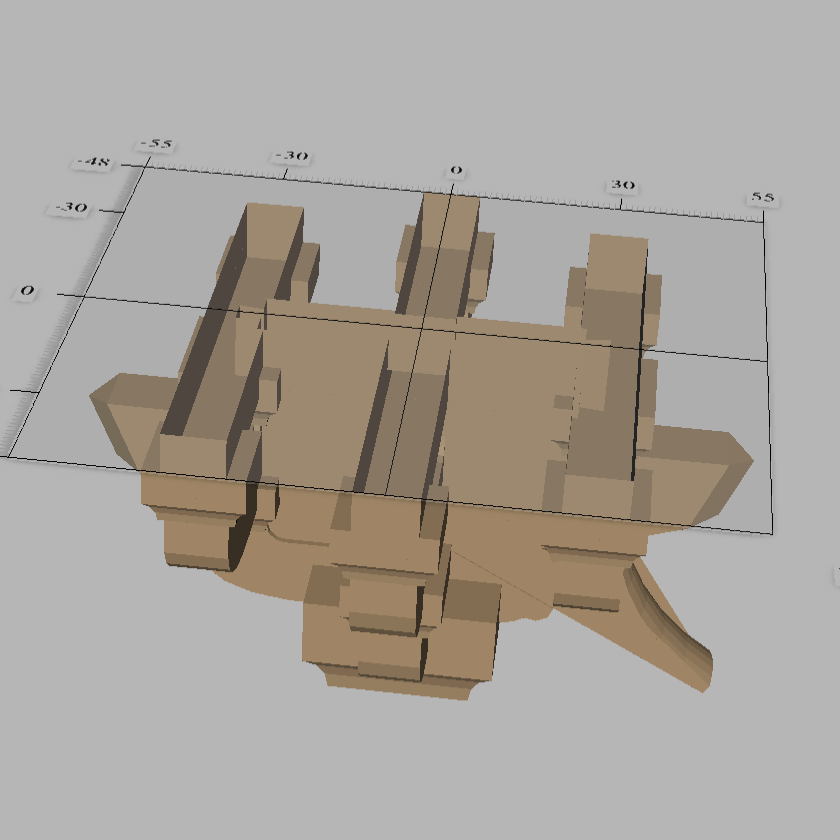
This study focuses on Web3D technology, exploring the application of Extensible 3D (X3D) to browser-based 3D presentation, and adopts the dougong (bracket set) components of an architectural model as the subject of demonstration to build a 3D digital asset presentation system that runs directly in a web browser. X3D describes 3D content through a scene graph and node structure, and its open standard, markup-based language, and integration with web graphics rendering make it a suitable foundation for Web-based 3D modeling and presentation.
Using the scene nodes, grouping hierarchy, andn node-naming mechanisms of the X3D standard, this study integrates component geometry, names, dimensional information, and assembly relationships into a single scene description; combined with HTML document structure and JavaScript techniques, the system implements interactive functions including 3D navigation, component selection, information display, dimensional annotation, cross-sectional viewing, and dynamic presentation of the assembly process, allowing 3D models to be operated and queried directly in a standard browser.
The outcomes of this study include a Web-based 3D digital asset presentation system built with X3D, a set of dougong component models converted into the standard format, and a Web3D presentation workflow that can be applied to other digital archive content. To evaluate the effectiveness of this presentation method, a between-subjects experiment was conducted with a printed-material group of 15 participants and a system group of 18 participants; the system group performed significantly better in task completion time and in ratings of the medium.
The results show that X3D, combined with web interaction techniques, can present hierarchically structured and information-annotated 3D content in a low-barrier, cross-platform manner, offering advantages in information-retrieval efficiency and user acceptance, and can serve as a reference for Web-based 3D graphics presentation, digital archives, and interactive 3D knowledge visualization.
Explore, move, and inspect the detailed components of dougong structures, with step-by-step assembly visualization.
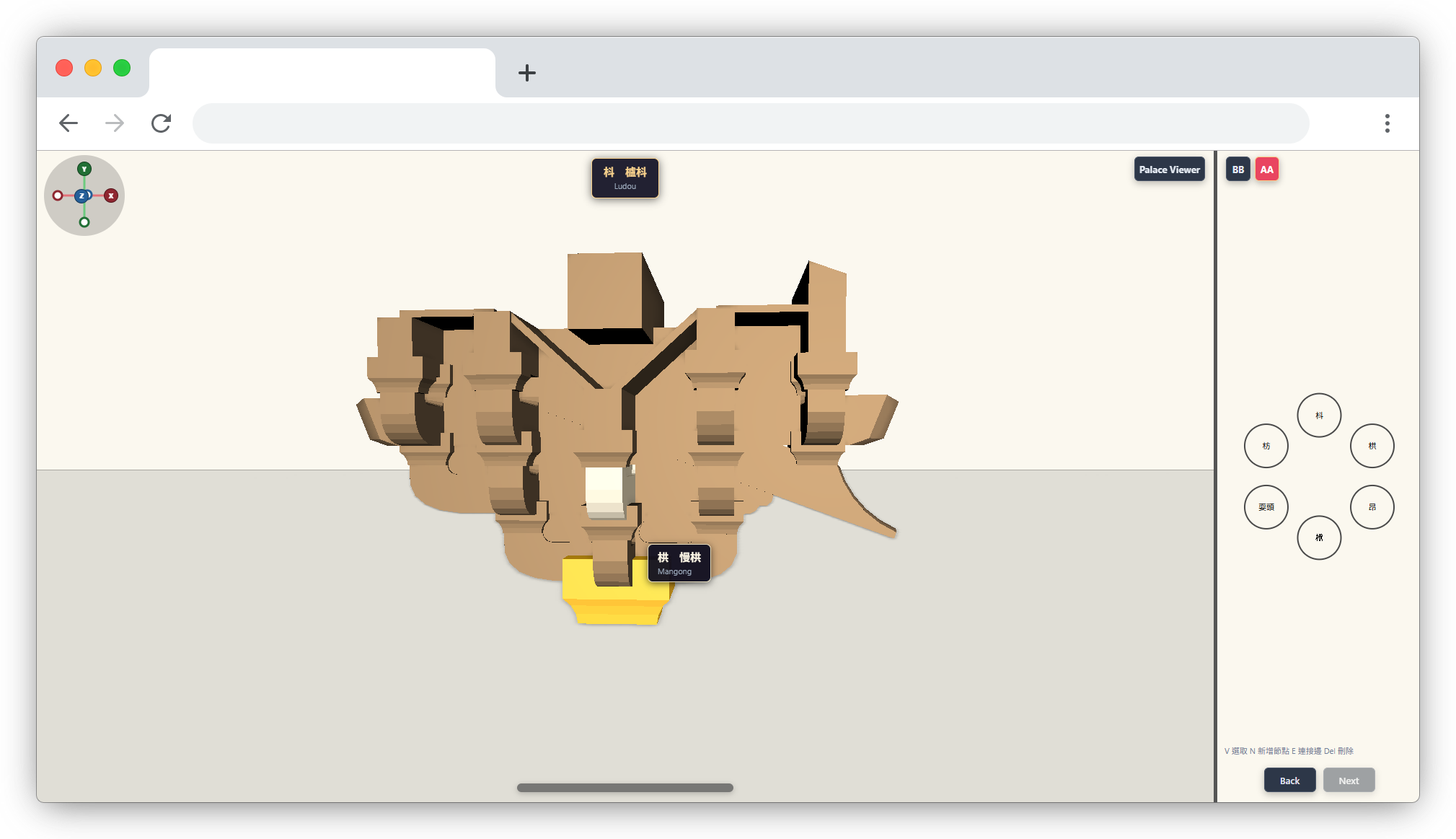
Browse more than one hundred digital heritage building components through a lightweight viewing interface.
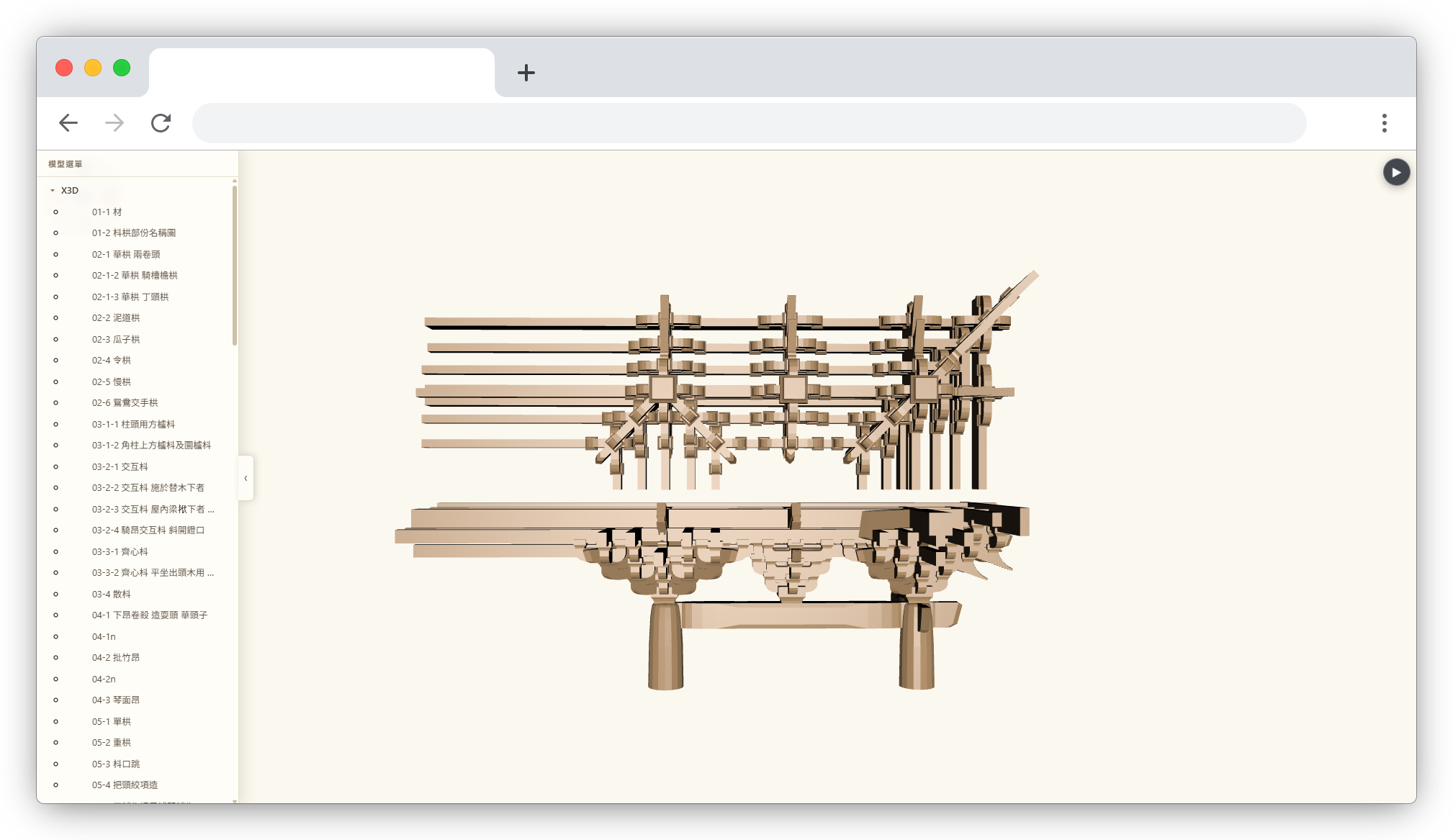
View the palace model with auxiliary guide lines that support spatial reading and structural understanding.